Cinderella Ate My Daughter: Princess Culture and Girlhood
What if every choice a young girl makes, from her favorite color to her future career, is shaped by a multi-billion dollar marketing machine? That is the modern toy aisle, and Peggy Orenstein's Cinderella Ate My Daughter unpacks how hyper-engineered girly-girl culture rewires kids' brains. The author, an expert on girls' development, was blindsided by the pink wave that overtook her own daughter. This episode explores how princess mania began, why parents buy in, and what it means for child development.
The Princess Brand Was Invented
Disney princesses feel timeless, but the official brand only started in 2000. Disney hired former Nike executive Andy Mooney, who noticed girls at a Disney on Ice show wearing homemade princess costumes. He saw untapped demand and no official supply. Mooney created the Disney princess brand, an unprecedented move to market characters from different films together. Internally it was controversial. On merchandise, the princesses never make eye contact; they look in different directions to preserve separate mythologies. The strategy worked, exploding into a four billion dollar franchise with over 26,000 distinct items, from band-aids to bicycles.
Why Parents Buy the Innocence
If princess culture is a marketing invention, why do parents eagerly open their wallets? Orenstein traces it to deep parental anxiety. Parents associate princess culture with wondrous innocence, a protective bubble against a world where kids grow up fast. The author compares this to parents in the 1930s clinging to Shirley Temple dolls during the Great Depression. Today's parents view the princess phase as a guarantee that their little girl is still just a little girl, safely isolated from premature sexualization. But the book suggests that impulse is weaponized. The products teach materialism and link a girl's core value to her physical appearance.
Pink Was Once for Boys
We treat pink as if it is encoded into female DNA, but historically pink was considered masculine. Red represented blood, war, and fierce vitality, so pink, a pastel version of red, was viewed as appropriate for young boys. Blue was seen as feminine, linked to the Virgin Mary and symbolizing constancy and delicacy. As late as the 1930s, department stores instructed parents to dress boys in pink and girls in blue. What flipped the script was market segmentation. The clothing and toy industries created demographic categories, including the toddler, to sell more products. Dividing categories by gender meant families could not hand down a blue bicycle to a girl; they had to buy a pink one.
Nurture Becomes Nature
Orenstein consults neuroscientist Lise Eliot, who acknowledges a biological baseline: small innate differences exist, such as slight male preference for toys with moving parts and slight female preference for toys with faces. But marketers exploit neuroplasticity, the brain's malleability. Immersing kids in hyper-gendered environments physically wires their brains further apart, like learning a language: babies can distinguish any language's sounds, but the brain prunes away unused abilities. Dividing toys teaches boys and girls different behavioral languages. The Sanford Harmony program observed that self-segregated play, boys in competitive packs and girls in cooperative pairs, can erode cross-gender communication and lay groundwork for adult relationship breakdowns.
Key takeaways
- The Disney princess brand was created in 2000 by a former Nike executive.
- Parents buy princess culture as a protective bubble of wondrous innocence.
- Pink was considered a masculine color until market segmentation flipped it.
- Hyper-gendered toys exploit neuroplasticity and wire boys and girls apart.
- Self-segregated play may erode the shared vocabulary for adult empathy.
Parents think they are buying innocence, but the products actively teach young girls materialism and firmly link their core value to their physical appearance.
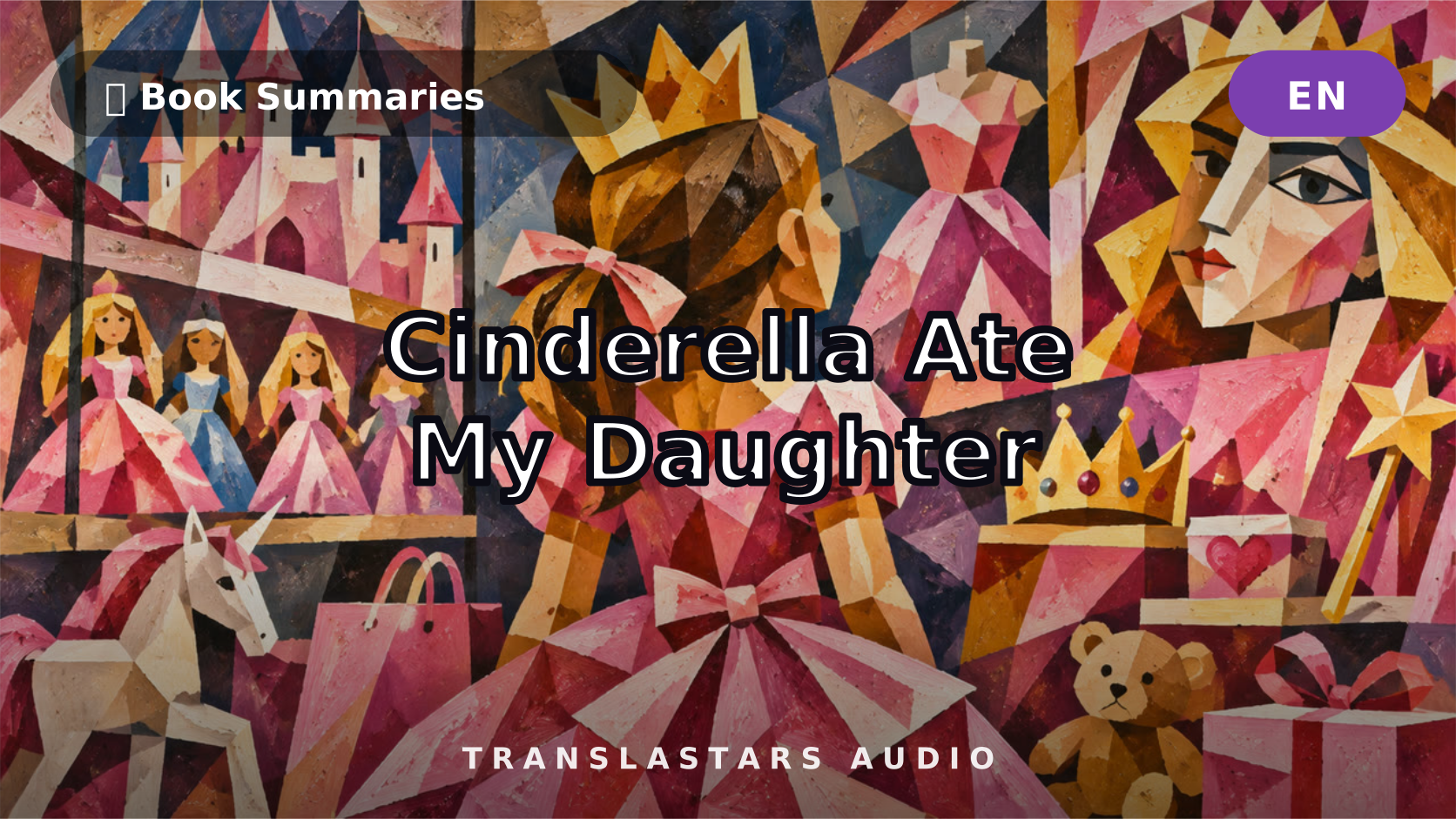
Peggy Orenstein's Cinderella Ate My Daughter examines how princess marketing shapes girls' identity, from pink toy aisles to child beauty pageants.
▶ Listen to the summaryKeep learning, 15 minutes a day
TranslaStars Audio turns the best books, courses and podcasts into audio summaries you can listen to anywhere. Add it to your home screen and build a daily learning habit.
Open TranslaStars Audio