Meditations by Marcus Aurelius - Summary | TranslaStars Audio
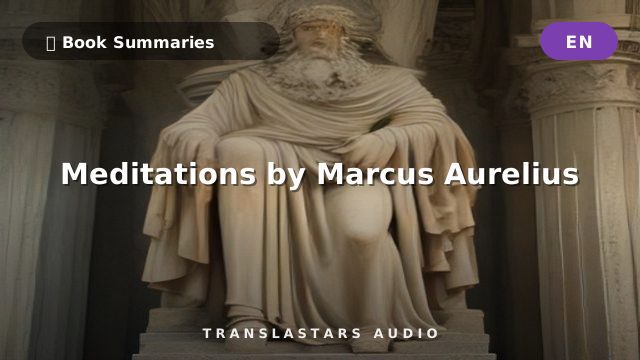
Imagine ruling the known world while a plague, endless war, and a friend's betrayal tear your life apart. That was the reality behind Meditations by Marcus Aurelius, a private notebook never meant for publication. This TranslaStars Audio summary reveals it as the original self-help manual for surviving what you cannot control.
A Notebook Written to Survive
Marcus Aurelius was adopted into the imperial line as a teenager and never wanted the job. His dream was a quiet life of study, but he inherited an empire on fire: the Antonine plague, the Marcomannic Wars, and the revolt of Avidius Cassius. His Greek title was Ta eis Heauton, meaning to himself. These were spiritual exercises, repetitive mental drills written by lamplight to keep his mind from fracturing.
The Logos and the Moving Wagon
Stoicism taught Marcus that the universe is governed by the Logos, a rational force woven through all things. Everything is determined, like a dog tied to a moving wagon: it can trot alongside or be dragged, but the destination never changes. Free will is only your voluntary accommodation to the inevitable.
Perception, Action, and Will
Pierre Hadot described three disciplines Marcus practiced. The discipline of perception strips away emotional stories: wine is fermented grape juice, purple robes are sheep's wool dyed with shellfish blood. The discipline of action means doing your duty without complaint, like rowers pulling together in one boat. The discipline of will accepts what you cannot change, even finding beauty in cracked bread and falling olives.
Key takeaways
- Strip away false perceptions and see reality as raw data, not as a story.
- Do your duty to others without complaining, because we are all rowing the same boat.
- Accept what you cannot change, like the bitter cucumber you simply throw out.
- Use the morning-bed argument: even bees and ants get up and do their work.
- Treat aging and death as natural, like a ripe olive falling and thanking the tree.
- Build an invulnerable inner fortress, since only your judgments belong to you.
Does building an invulnerable fortress keep the enemy out, or does it just end up locking you inside?
Marcus Aurelius ruled the Roman world while plague, war and betrayal tore at his empire, and he wrote a private notebook that was never meant to be read. This d
▶ Listen to the summaryKeep learning, 15 minutes a day
TranslaStars Audio turns the best books, courses and podcasts into audio summaries you can listen to anywhere. Add it to your home screen and build a daily learning habit.
Open TranslaStars Audio